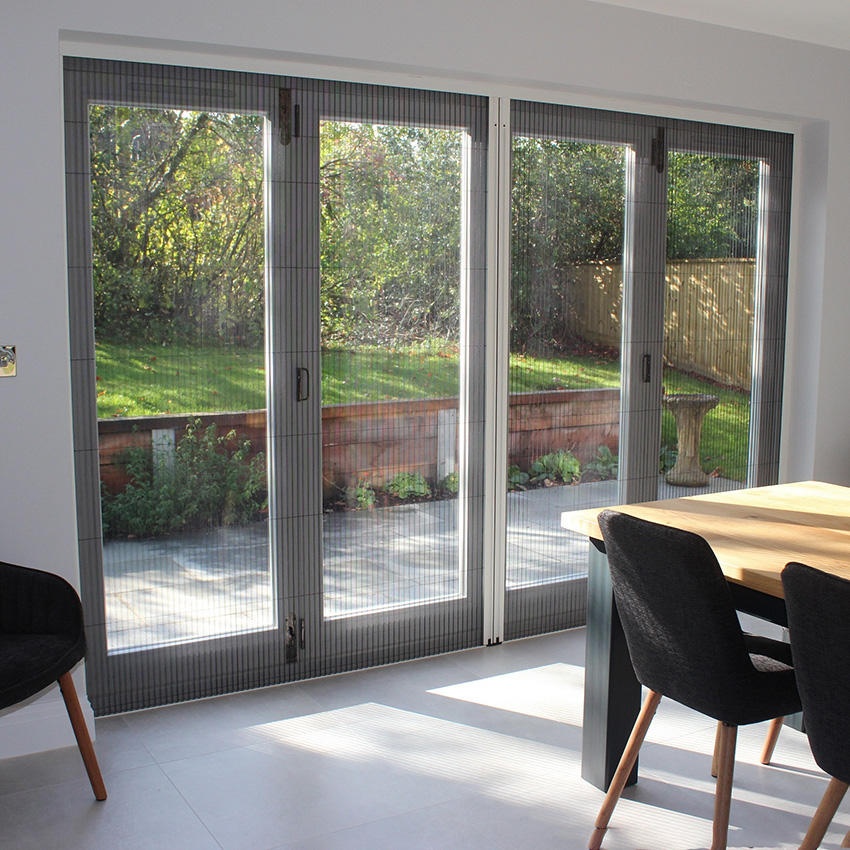
Why Measurement Matters More Than Material A custom screen is only as good as its measurements. The most common reason a custom screen does not fit is not a manufacturing error — it is a measurement taken at the wrong point, or a measurement that does not account for the frame depth. Before ordering any custom screen, spend ten minutes measuring correctly. It saves weeks of remakes and return shipping.
This guide covers the four window and door types most customers order screens for: sash windows, casement windows, sliding windows, and patio or balcony doors.
Tools You Need A metal tape measure (not a cloth tape — cloth stretches)
A pencil and paper
A helper for wide openings
Your phone, to photograph the window and the tape reading together
Measuring Sash Windows Sash windows slide up and down. Measure the visible glass opening at the point where the screen will sit, not the outer frame.
Measure the width at three points: top, middle, bottom. Use the smallest number.
Measure the height at three points: left, middle, right. Use the smallest number.
Note the frame depth — the distance from the glass to the outer face of the frame. This determines whether a magnetic or adhesive-mounted screen will sit flush.
Record measurements in millimetres or inches, and state which unit you used. Mixing units is the second most common cause of remakes.
Measuring Casement Windows Casement windows open outward on a hinge. The screen sits on the inside frame, so measure the inner frame opening.
Measure the width between the left and right inner frame edges, at top and bottom. Use the smaller number.
Measure the height between the top and bottom inner frame edges, at left and right. Use the smaller number.
Check for handles or hinges that protrude into the opening. Note their position and size.
Measuring Sliding Windows Sliding windows have two panels, one of which slides. The screen usually covers the entire opening, not just the sliding panel.
Measure the full width of the opening, from outer frame to outer frame.
Measure the full height from top track to bottom track.
Note which panel slides, and whether the screen needs to sit on the inside or outside track.
Measuring Patio and Balcony Doors Patio doors are wider and heavier than windows, and the screen often folds or slides. Measure the full door opening, not the door panel.
Measure the width at the top, middle, and bottom of the opening. Use the smallest number.
Measure the height at the left, centre, and right. Use the smallest number.
Note the threshold height — the distance from the floor to the bottom of the door frame. A folding screen door needs clearance for the bottom track.
If the door opens outward, confirm there is space for the screen to fold back without hitting a wall or railing.
Photograph Everything Take a photo of each measurement with the tape visible in the frame. This is the single most useful thing you can do if a question comes up later. A photo showing the tape at the exact point of measurement removes ambiguity that a number alone cannot.
What to Send When Ordering When you send measurements for a custom quote, include:
Width and height, in a stated unit
Window or door type (sash, casement, sliding, patio)
Photos of the opening with the tape visible
Any obstructions (handles, hinges, air conditioning units)
Your delivery country, so shipping can be quoted at the same time
Common Mistakes to Avoid Measuring the outer frame instead of the opening where the screen sits
Using a cloth tape that stretches
Measuring only one point instead of three
Forgetting to note frame depth
Mixing inches and millimetres in the same order
A custom screen that fits correctly on the first order is the result of ten careful minutes with a tape measure. The FD01, H01, H05, and FD04 are all made to measure, and accurate measurements are the difference between a screen that lasts years and one that has to be remade.